Tree of Life Explorer – Royal Botanic Gardens, Kew
- Role
- UX & UI Design
- Type
- Web Application
- Result
- Improved discoverability, leading to 85% increase in users
- Website
- treeoflife.kew.org
Overview
Having previously designed the Tree of Life Explorer for Kew Gardens, I was brought back to investigate why the platform wasn’t reaching more users. I developed and led a research plan to understand why people weren’t using it and identify opportunities for improvement, resulting in an 85% increase in users.
The problem
How do you know, what you don’t know?
The Tree of Life Explorer is a web application built by Kew Gardens, to give access to the tree of life for over 10,000 genera of plants, as well as the DNA sequence data behind it.
I previously led the product’s design from the ground up, leading discovery workshops and interviews with Kew’s scientists. I also took the time to understand the fundamentals of plant genomes and DNA sequencing, helping me make sense of the underlying data and the experience I was designing.
A while after launch the team at Kew Gardens reached out to me again to help investigate concerns around its relatively low user numbers. They wanted to understand whether this was a problem with the product itself, a lack of awareness among its potential audience, or simply a reflection of its specialist subject matter.
The brief centred on a core set of questions:
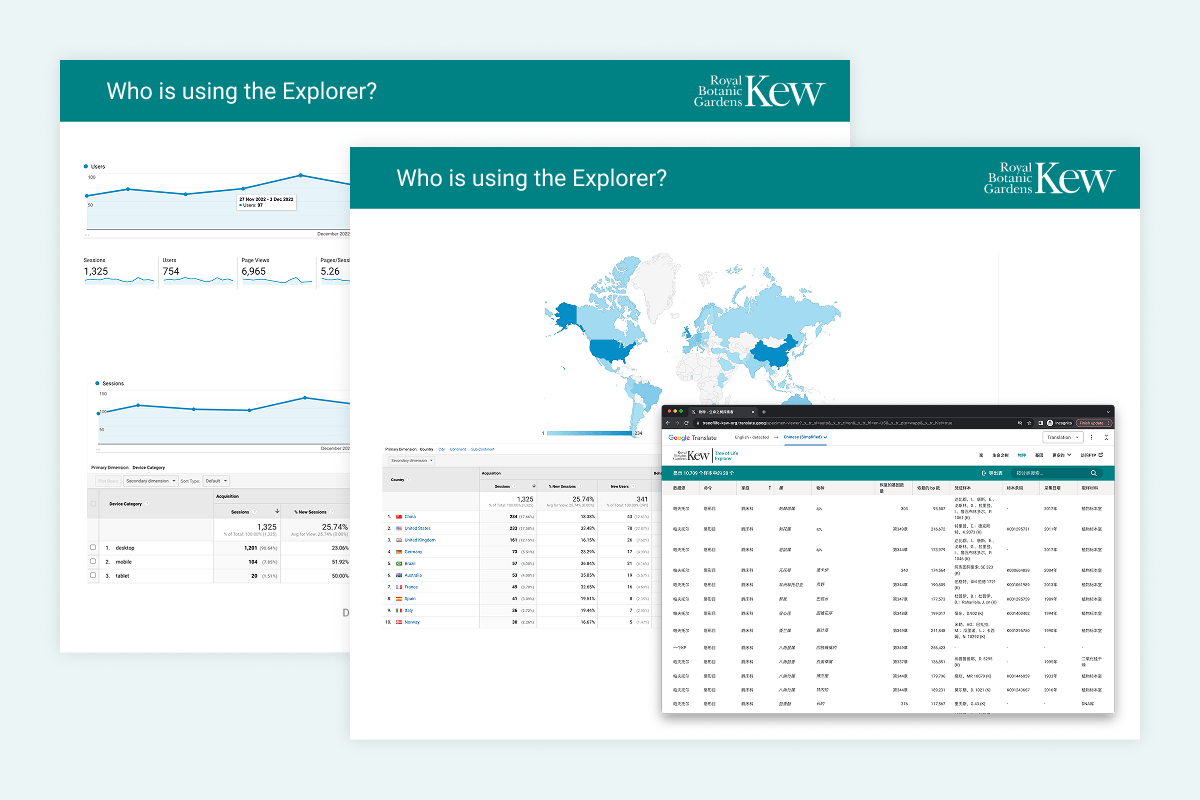
- Who is using the Explorer, and do they reflect our target audience?
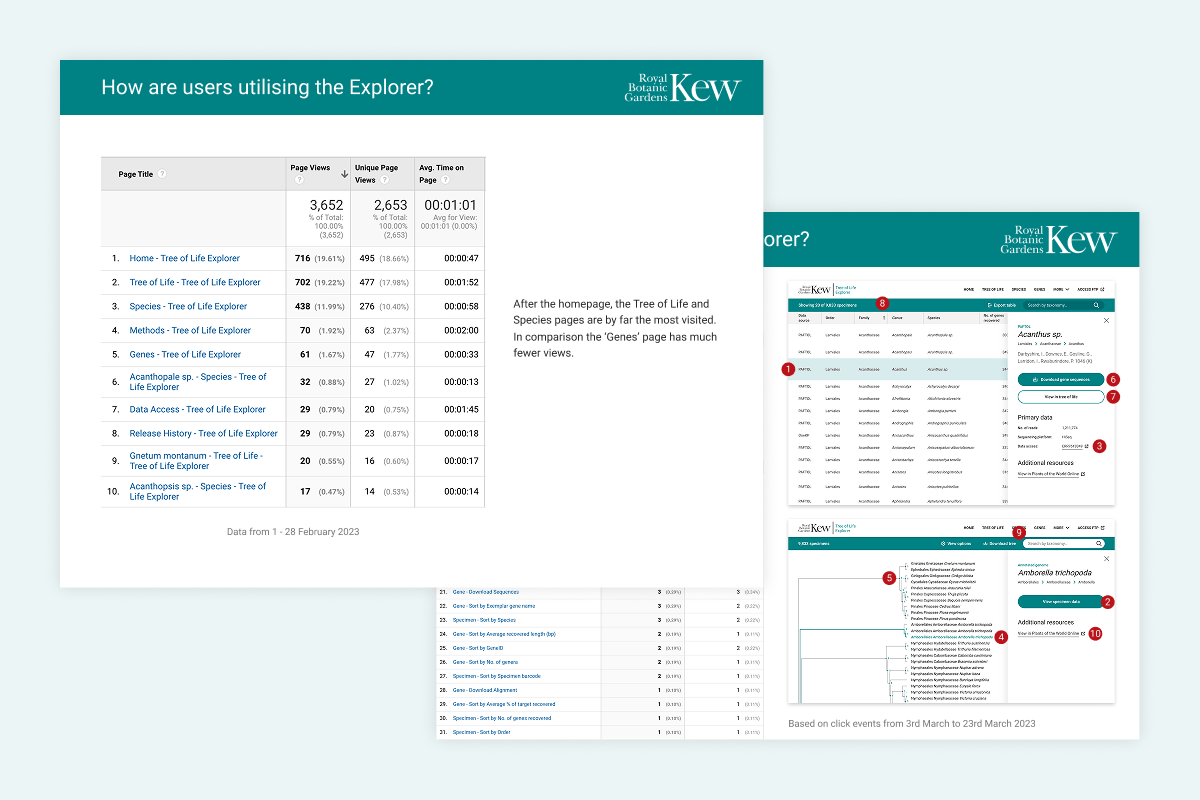
- How are users actually using it, and what do they find most useful?
- Who isn’t using the Explorer?
- Is there something preventing it from being used?
My approach
From data analysis to user interviews
In order to answer the questions laid out in the brief, I broke the project into four stages: analysing usage data, a user survey, one-on-one user interviews, and finally creating designs in response to my findings.
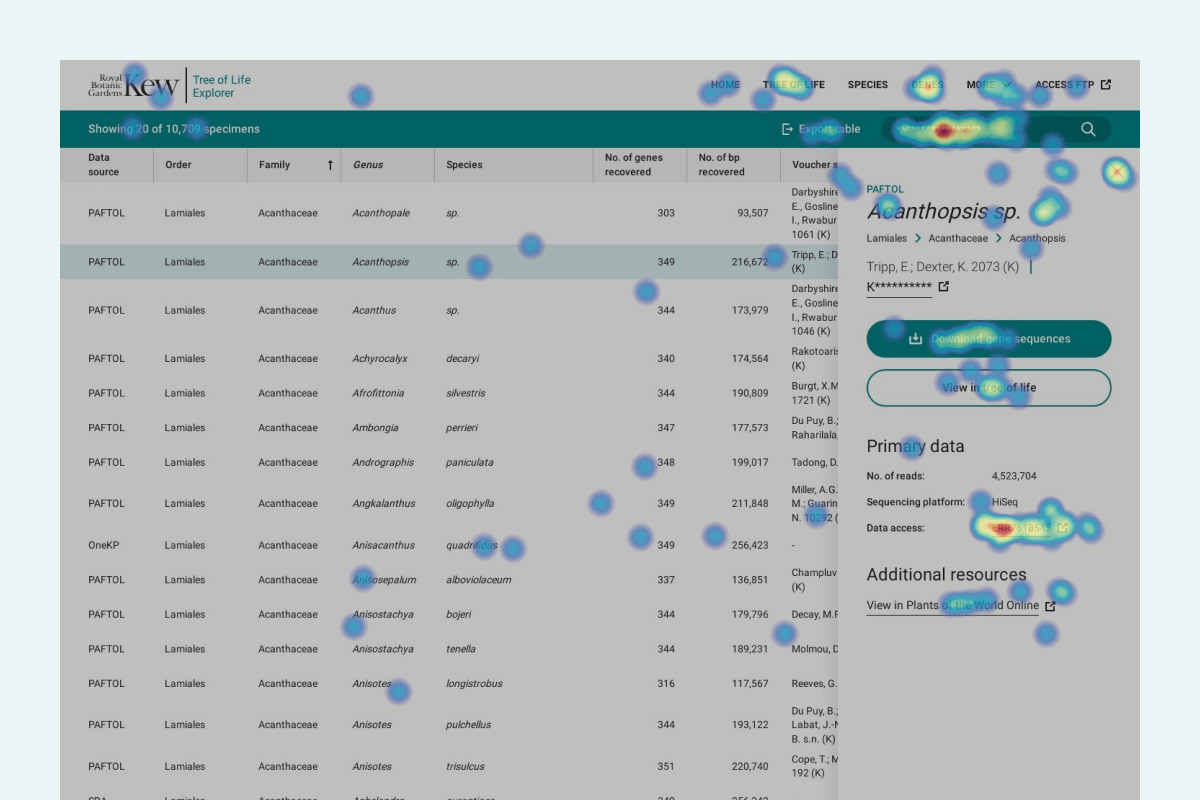
I began with Google Analytics, event tracking, and heatmaps to build a picture of how the website was being used and which areas were most visited. In parallel, I placed a survey on Plants of the World Online (POWO) – Kew’s most visited science resource – to assess the size of the potential market and gauge awareness of the Explorer.
I used the findings from both to shape a series of one-on-one interviews with experienced users of the Explorer. These gave me the opportunity to dig deeper into how people were using the application, what worked well and where they were encountering difficulties. Together, the research helped build a clearer picture of why the Explorer wasn’t reaching more people, and where improvements could make the biggest difference.
01
Data analysis
Google Analytics, event tracking & heatmap analysis
02
Market survey
Placed on POWO to gauge awareness & audience interest
03
User interviews
5 one-on-one sessions targeting key research questions
04
Design
New discoverability features and usability improvements
From the survey
The majority of users didn’t know it existed
In order to gauge interest, I realised we could take advantage of POWO and it’s extensive user base, by placing a short survey with three questions: whether users would be interested in accessing the Tree of Life data, whether they knew the Explorer existed, and, since it was assumed the Explorer was aimed toward more technical users, what level of scientific qualifications they had.
The survey results showed that users across all levels of scientific background, from casual enthusiasts to PhD researchers, had a high interest in the tree of life. But almost 60% of potential users had no idea the Explorer existed.
The survey included a link to the Explorer at the end. It was only live for a single day before reaching its respondent limit, but in that one day, visits to the Explorer increased fivefold.
79%
of surveyed users were interested or very interested in viewing the tree of life and its supporting DNA data
59%
of users had no idea the Explorer already existed, regardless of their level of scientific knowledge
5x
increase in Explorer visits on the single day the survey was live, suggesting discoverability as a key problem
User interviews
Key insights from speaking to users
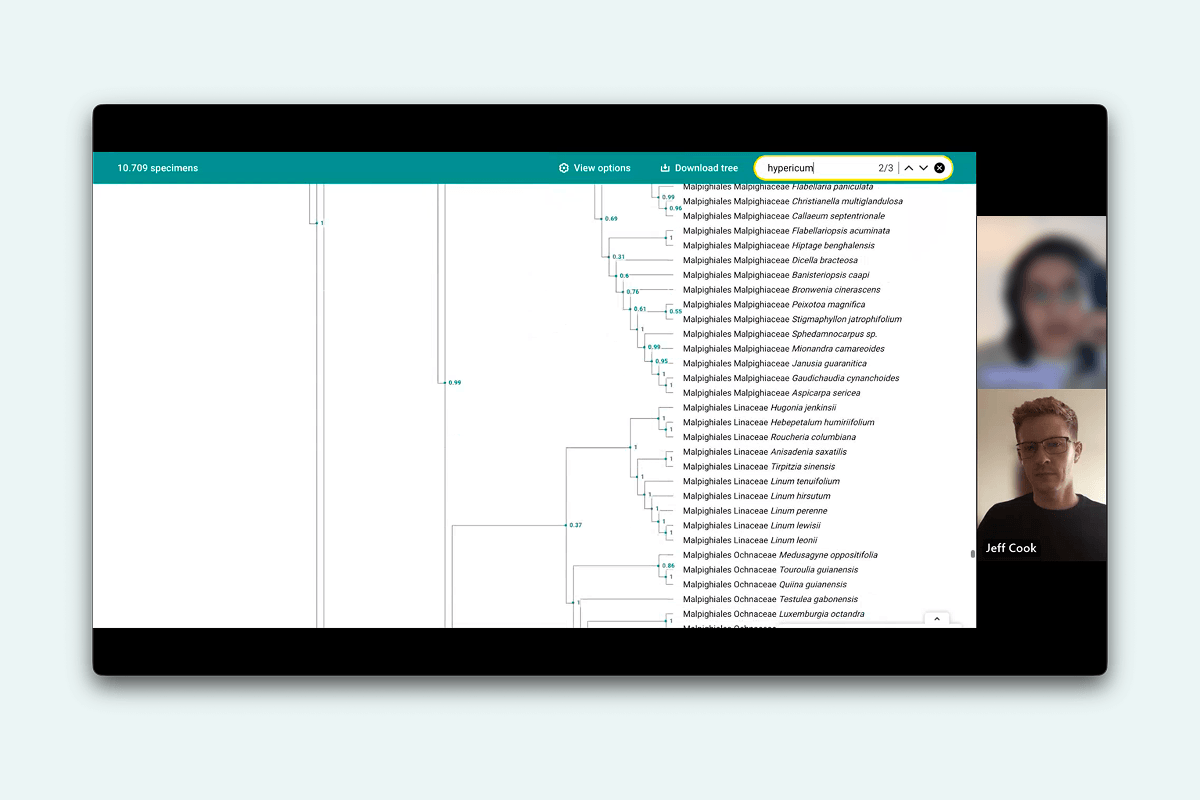
Based on the findings from the analytics research, I conducted five one-on-one user interviews with expert users from different organisations. Each interview focused on the key areas identified in the earlier research, and covered the users’ backgrounds, how they interacted with the Explorer, how they incorporated its data in their day-to-day work, and any difficulties they encountered whilst using it.
The interviews gave me a much better understanding of how other scientists used the Explorer to support their research, specific use cases, and which features they valued most or may have struggled with. All five users spoke positively about the service, and relied on it in their work, but also highlighted opportunities to improve how information was accessed, explored and viewed.
The design solutions mentioned below all stemmed directly from use cases discovered during these interviews.
The solution
Translating research into design
The positive feedback from user interviews, combined with the survey results demonstrated that the problem wasn’t with the service itself, but with the discoverability. Users who would benefit from the Explorer simply had no way of finding it or even knew it existed.
My response targeted three areas: connecting POWO’s extensive audience to the Explorer, making navigation between Kew’s Science platforms seamless, and improving the Explorer itself based on user feedback and pain points discovered during the interviews.
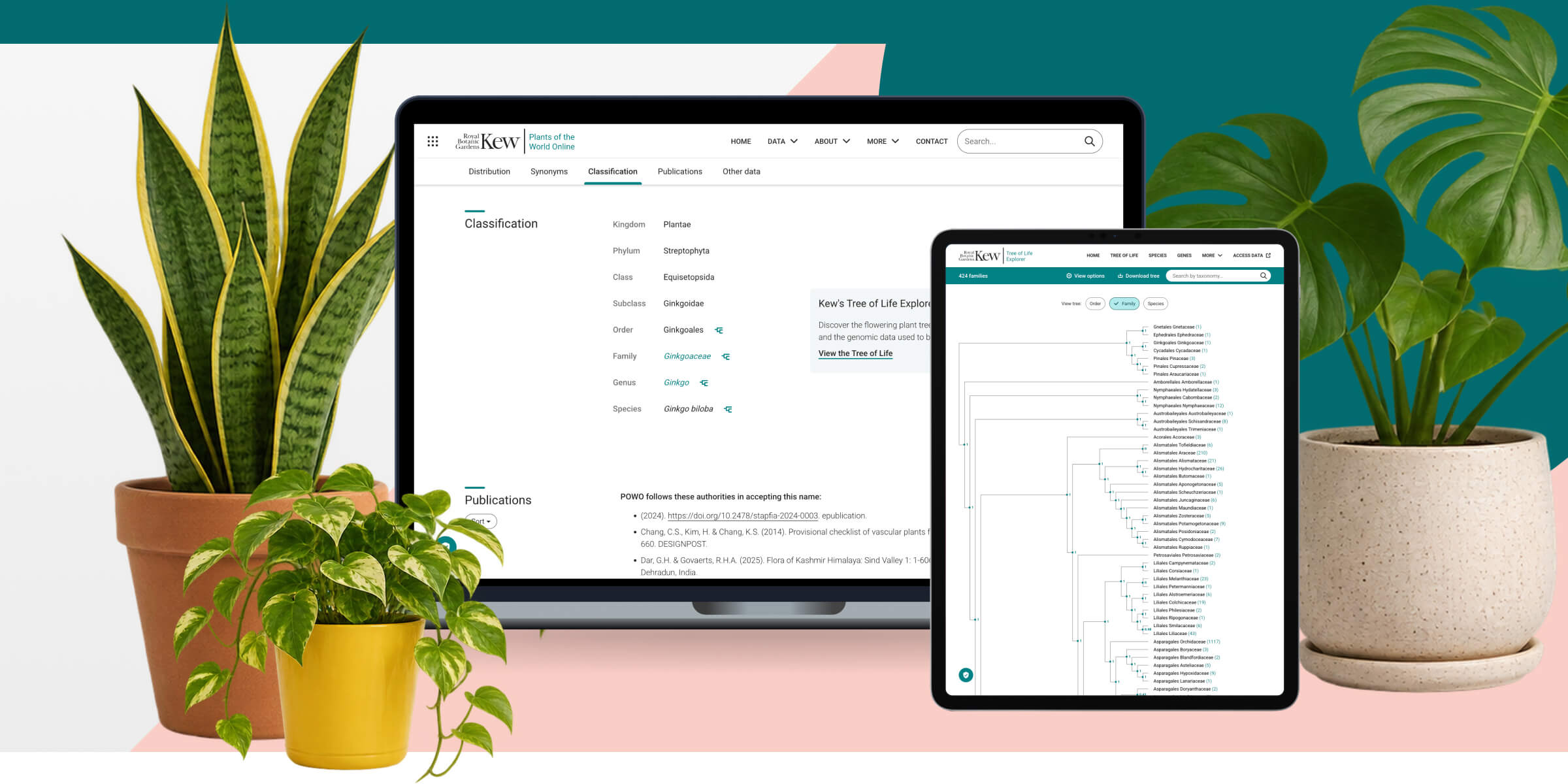
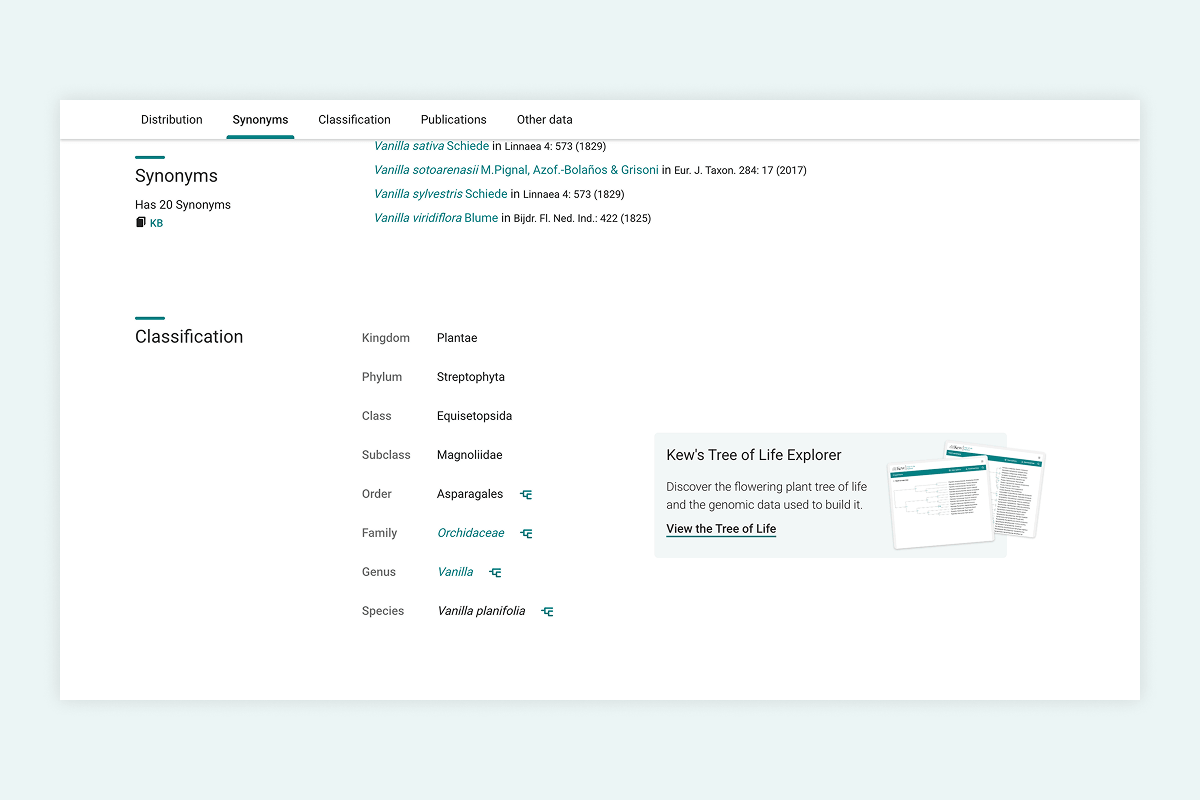
Classification section on POWO
Although the tree of life data existed within Kew’s ecosystem, Plants of the World Online, their most visited science platform, made no use of it. I designed a dedicated classification section within POWO, directly surfacing and linking to the Explorer. The result benefitted both platforms, bringing new content to POWO, and extra visibility to the Explorer.
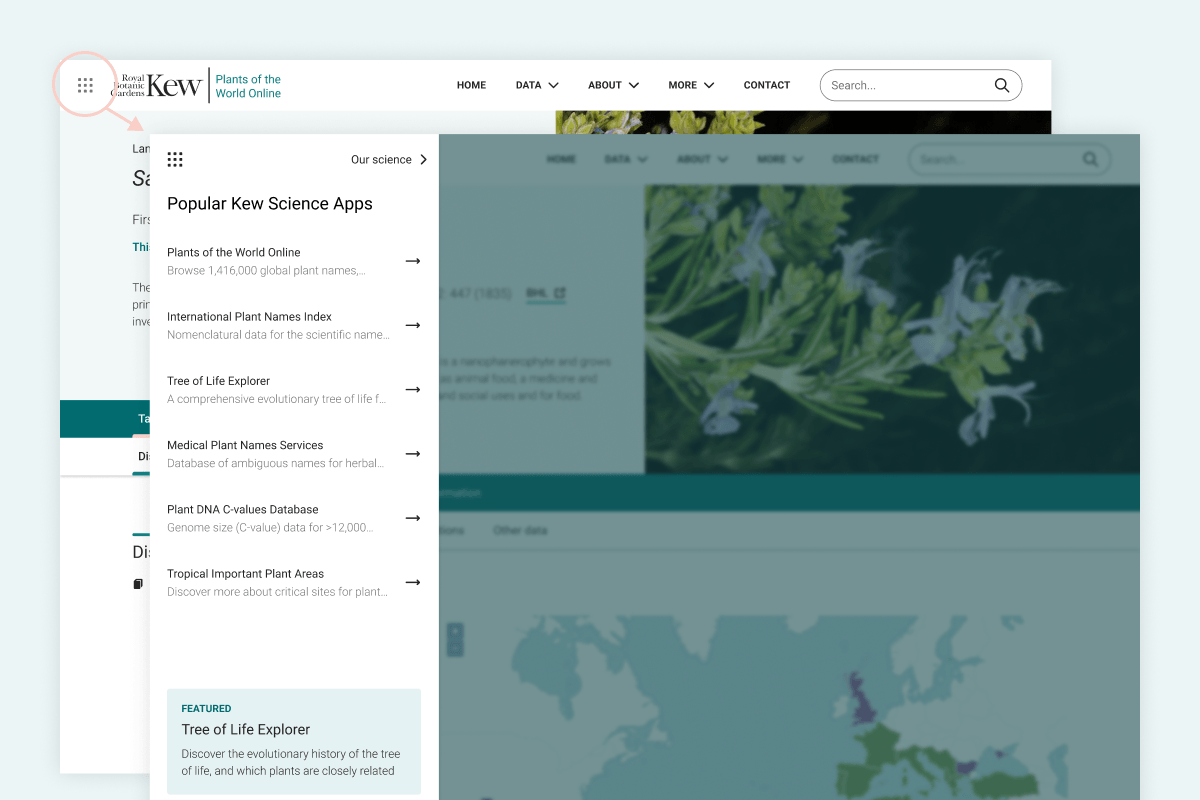
App Switcher
To make navigation between Kew’s science platforms seamless, I designed and implemented an App Switcher — an icon placed next to the logo that allows users to view and easily switch between other Kew Science websites. A small addition, but a significant improvement to the discoverability of what Kew Science has to offer.
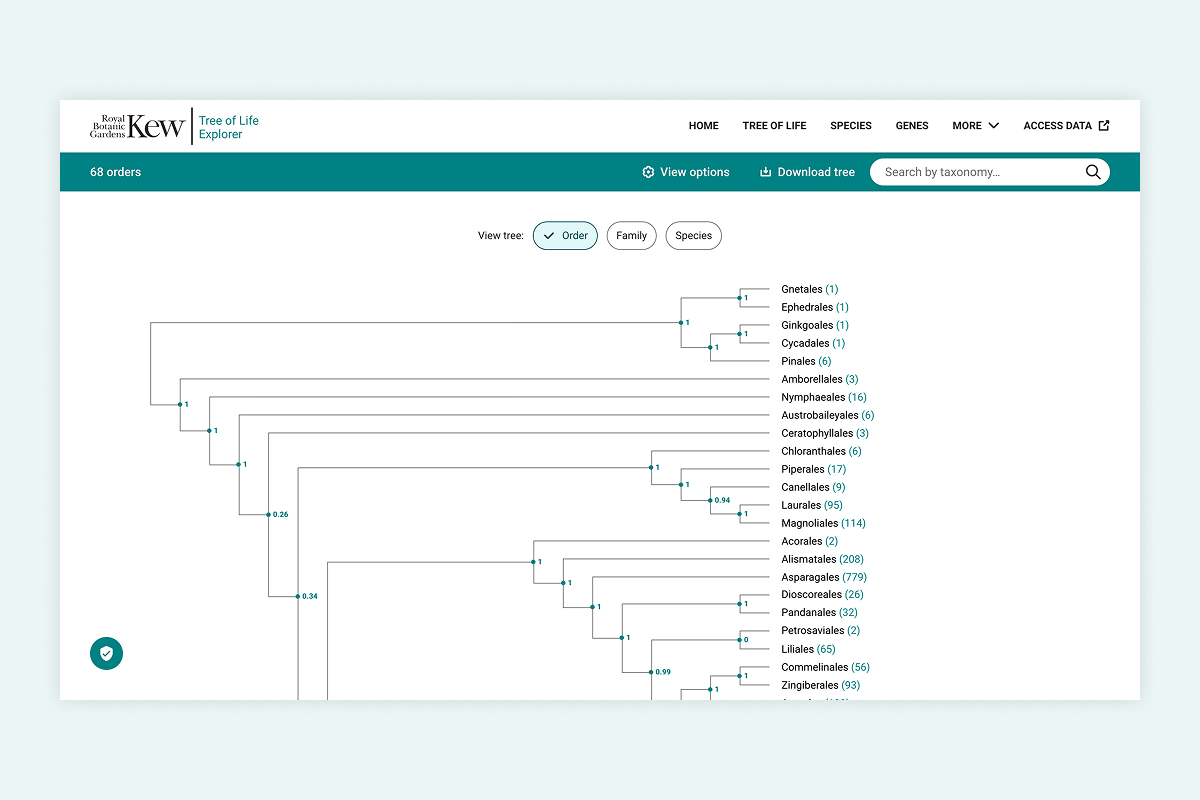
Broader tree views
The existing Explorer only allowed users to browse the tree of life at a species level. Based on interview feedback, I worked with the development team to introduce higher-level views at the order and family level, giving researchers a much broader perspective on plant relationships at a glance.
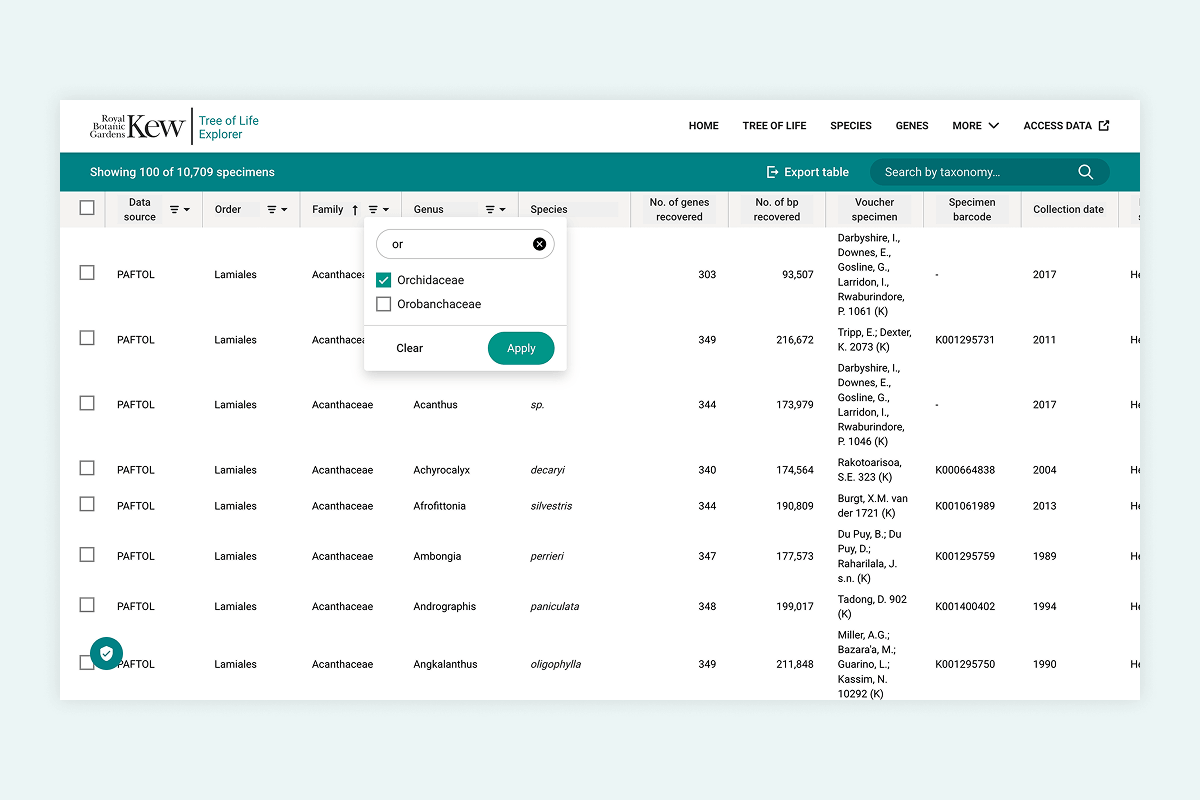
Filterable DNA data table
Users flagged that navigating the DNA data table was cumbersome when working with large datasets. I introduced filtering functionality, allowing users to quickly narrow down results and find the specific data they needed — significantly reducing friction for researchers doing detailed work.
The outcome
85% increase in users
By connecting POWO’s existing audience to the Tree of Life Explorer via the App Switcher and a new classification section, the number of users accessing the Explorer grew by 85%. It also had an affect on the rest of Kew’s science websites, resulting in higher engagement across the board.
72%
of respondents liked or loved the App Switcher
77%
agreed or strongly agreed it helped them discover what else Kew Science has to offer
100%
would like to see the App Switcher rolled out across all other Kew Science websites
Recognition
Following the success of the project, I was invited by the Head of Science to present to over 100 staff members, to demonstrate how data and analytics can be used to enhance the services Kew offers.